
The day before Thanksgiving in 2009 I was invited to assist with the Nutty Putty Cave rescue of John Edward Jones. I ended up being the last person to see him alive, though at the time I arrived he was mostly unconscious. Since that time I have received numerous questions from reporters and curious individuals. Recently there has been an uptick in those requests as a result of some viral videos that have been posted. This is my attempt to provide information and help answer the questions that I am qualified to answer.
The day after the rescue efforts failed I wrote up a detailed account from my perspective of the rescue while it was fresh in my mind. Keep in mind that this is only one perspective from someone who arrived at the scene toward the end of the rescue efforts.
For a more well-rounded perspective I would encourage you to read Lindsay Whitehurst’s two-part Salt Lake Tribune article.
I will provide some commentary below my report with the footnote number indicated in report in parenthesis.
WARNING: This report contains descriptions of John Jone’s condition, passing, and post-mortem condition that could be disturbing to some readers. Out of respect for John and his family, I have tried to keep descriptions as general possible while addressing the challenges we were up against.
Nutty Putty Rescue Report
Written for SAR on November 25, 2009
I received the first call at 9:00 or 10:00 AM from Spencer Christian and Rodney Mulder that there was a rescue underway at Nutty Putty. They asked me if I could assist, but after asking a few questions about what was going on it seemed there were already enough people on site to carry out the rescue. I told Spencer and Rodney that if the rescue went on for a while and people started getting exhausted, and they absolutely needed me, that I would come.
About 5 hours later Spencer called me up and asked me to respond, saying that people were getting tired and they really needed small cavers. So I left work at about 4:00 PM, ran home to grab my caving gear and then headed out to Nutty Putty. I arrived at the site at about 6:00 PM and was put on the next group to go in the cave at about 6:30 PM.
When I arrived to the main passage at the opening of the Birth Canal people were working on the 4 to 1 haul system they had installed. I assisted for about 5 minutes, until it was decided that the system didn’t seem to be working (1) and the people by John Jones (the victim) needed a break. So the cavers that were working with John headed out.
On the way out I spoke with Andy Armstrong. I asked him how John was doing and he said that he was quickly going downhill, that he was in and out of consciousness and had started talking about seeing angels and demons around him.
As soon as they were out, we decided that I would head in first to assess the situation and see if I had any ideas for removing him, and then Debbie would work with John, since she had already spent some time with him getting to know him and she thought he would feel more comfortable with her.
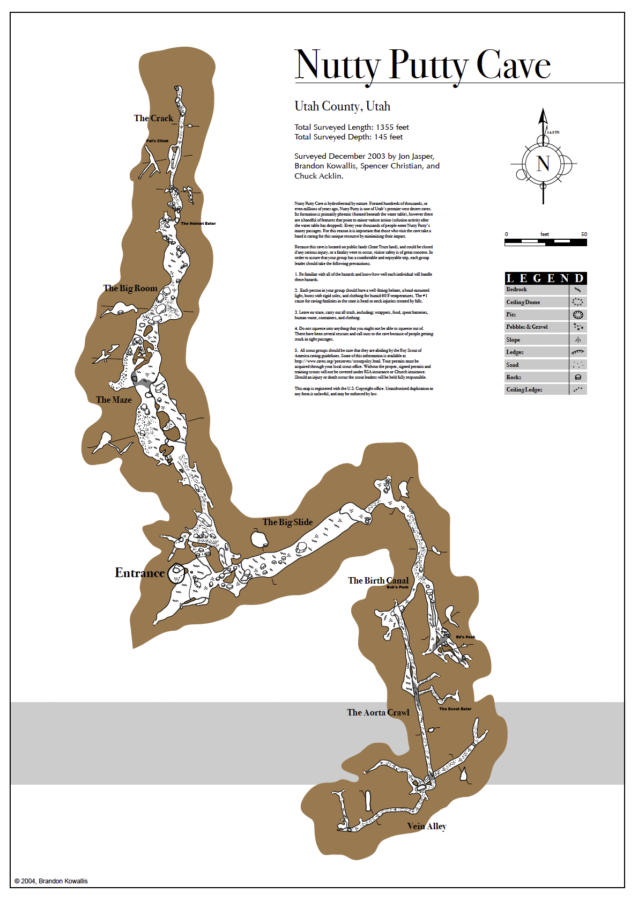
So I went in first. In the back of the passage, right before you arrive at where John now is, there is an extremely tight crawl perhaps 18 inches wide and about 8 to 10 inches tall that takes a sharp 90 to 120 degree turn that you have to enter feet first. You have to maneuver yourself very carefully and you cannot see where your feet are standing until you pass the restriction. As I wormed my way in I felt my feet touch something soft which ended up being John’s feet. I felt them move and immediately lifted my feet and worked my way horizontally into the crack.
John’s feet were about 6 feet past the constriction and I was able to shift myself to the side of him and down the 4 foot wide fissure. After stabilizing myself by jamming my body into a narrower section of the crack I began speaking to John asking him how he was and introducing myself. There was no response. I shifted my position a little and tapped him on the leg. I could hear him breathing a deep gurgling breath, as though his lungs were filling with fluid. Then his feet shifted as though he were trying to maneuver his legs out of the crack he was jammed in. The kicking looked fairly frantic and after a second he stopped and it looked as though he had drifted into unconsciousness. (2) I continued tapping him on the legs and hip to see if I could get a response, but there was no response.
From there I spent a few minutes studying the passage, the positioning of John, and the rig that was set up, to see how we could get him out from here. It looked very bleak. I wondered if it was even possible to get him beyond this point. We could continue trying the rig, but it looked like he could only be lifted another foot or two in his current position because of where the webbing was anchored around his knees. After a foot or two his feet would hit the ceiling. And then once he reached the ceiling, there was no way to tilt him to a horizontal position. He would have to do it himself, but he was now unconscious. And even if we could get him into a horizontal position, he would then have to maneuver the most difficult sections of the passage he was trapped in. If he were conscious and had his full strength there was a minute chance he could possibly do it. But even if that was the case it looked grim. It was even difficult for me, weighing 125 pounds, to get myself out. At the bend where the restriction was I had to creatively contort my body to slip through. So to get a 210 pound, unconscious person out seemed pretty much impossible. The other option I saw was to use a jack hammer to widen the crack he was and remove a couple of knobs and then widen the tight spot, and then pull him straight out. He would be cut up very badly and probably end up with several broken bones, but if nothing else would work, that seemed like the best option.
Between me climbing out and Debbie taking my place there was a request to take the radio down to John so that his family could say some words to him. I think it was his father, mother, and wife who spoke to him, telling him that they loved him and were praying for him and that his father had given him a blessing. His wife mentioned a feeling of peace, that everything would be OK. She talked to him about 5 to 10 minutes before I told her that we needed to get back to working at getting him out.
At that point I crawled out to let Debbie squeeze past and take a look and assess the situation, but when she got to the tight hole, both legs cramped up and she was unable to make it down. At that point I decided to try using the jack hammer. So we waited for it to arrive and then I carried it down to where John was located. The tool was much heavier than I anticipated and to hold it up while wedging my body in the crack took everything I had. Even then, I couldn’t get a good angle on the rock because of the confined space and limitations in my own mobility and positioning. I only got three tries at a small lip just below Johns foot, but because of my angle the hammer just kept sinking into the sand at the side of the rock lip. I tried shifting my position, but it seemed like everywhere else I moved I couldn’t get a handle on the jack hammer because of it’s length. I only had about 2.5 feet of space between me and the rock that needed drilled and the jack hammer was probably 3 to 4 feet long. And then trying to hold it in such an awkward position wore me out pretty quick.
At that point I requested something smaller, but there didn’t seem to be anything available, and even if there had been I don’t know if a small hammer drill would have done much against the solid limestone walls. So we returned to the Birth Canal to have a quick meeting to decide what to do.
At that point it sounded like the drills were having issues or something like that, and the only option we had for drilling was to use the compressed air hammer. It took probably an hour or so to get hose down so we could use it. While we waited, we decided that perhaps the best bet was to try widening the hole from the top down, working our way towards John instead of away from him. Once the drill arrived Debbie, Max, and I spent about an hour and a half chipping at the passage a couple of feet above the tight spot – about 7 to 9 feet away from John. Areas where the rock was softer came apart fairly easy, but the harder formations took an incredible amount of effort. The main problem was that because space was so limited it was difficult to hit the rock at the right angle, so instead of chipping off the knob you would end up cutting a hole straight into the floor.
After an hour and a half we had only knocked off about a 18” x 4” section of rock on the ceiling and on the ground. And that was at the wider section of the passage. From that point on the cave was even tighter so that if you were laying in the passage and weighed 125 pounds you only had about 3 to 6 inches of space above you. Not very ideal for holding a jack hammer or even being able to choose the most effective angle. To continue the process, or even if we switched to micro-blasters, my estimate was anywhere from 3 to 7 days to get back to where John was. So once again we regrouped to decide what the next plan of action was.
By now it was close to midnight and we were asked to check vitals on John. They sent in a smaller paramedic to see if he could get back to John. In the event he couldn’t he showed me how to use the stethoscope and thermometer and where to check for a pulse. It was 11:30 PM when we left the group by the birth canal and ventured down the passage. It took about 15 minutes to get to John. I went first to check, just in case the paramedic couldn’t fit. I first tried the stethoscope and was only able to get it about 3 inches up and to the right of his naval. I didn’t hear a distinct heart beat, only some ruffling, fluttering sounds that were probably a result of me shaking as I tried to steady myself in an awkward location. I then jammed my hand between the rock and pressed as far up his torso I could go to feel for breathing. I didn’t think I felt anything, but again it was difficult to tell as I was shaking from trying to steady myself. His chest, where it was pressed up against the rock, felt warmer than the rest of his body and was sweaty, but every where else his body temperature was close to the temperature of the rock on the cave walls. From there I removed his shoe and attempted to check his temperature. The thermometer read nothing, which the paramedic said was because the temperature was below the range. As I took his shoes off and moved his feet I noticed that his feet and legs were significantly stiffer than they had been earlier and it was difficult to his leg more than a few inches.
I reported my findings to the paramedic above and then crawled out so that he could see if he could squeeze in. He was able to get dow to the point where he could feel his feet and confirm he had passed away. John Edward Jones was pronounced dead at 11:52, I believe it was.
At that point we decided to return topside for a debrief to discuss what our next plan of action would be. As everyone headed out, the paramedic and I went back in to take pictures of the passage and John’s position.
With John now deceased the effort required to remove his body would be exponentially more challenging. His stiffening body wouldn’t be able to make the bend through the tight spot above his feet, without significant alterations to the passage, which could take days or weeks with a hammer drill, perhaps slightly faster with micro-blasters. Any swelling would make it next to impossible to get him out of the crack he was wedged in until the swelling had reduced. There was no way to connect him to a rope other than by his feet. After a few days, we would need a hazmat suit and masks to work with the body, which would severely overheat any rescuers trying to get him out. With pants and a short sleeve shirt a person is usually dripping with sweat in about 10 to 15 minutes and can work for about 30 to an hour before needing a break. With a hazmat suit and mask you could probably work for 5-10 minutes before needing a break, not to mention the limit to your mobility. The body recovery idea looks very grim. (3)
Photos from the Rescue
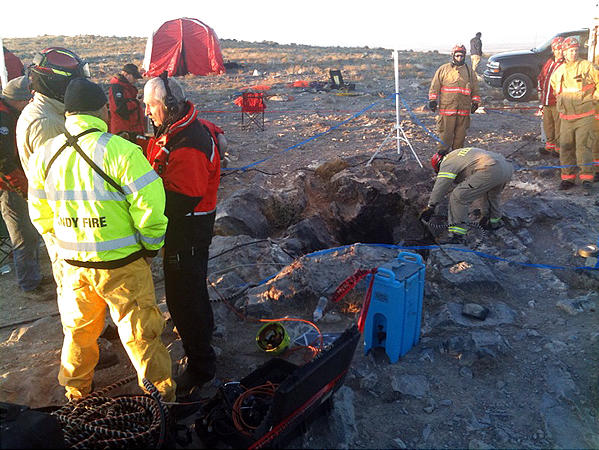

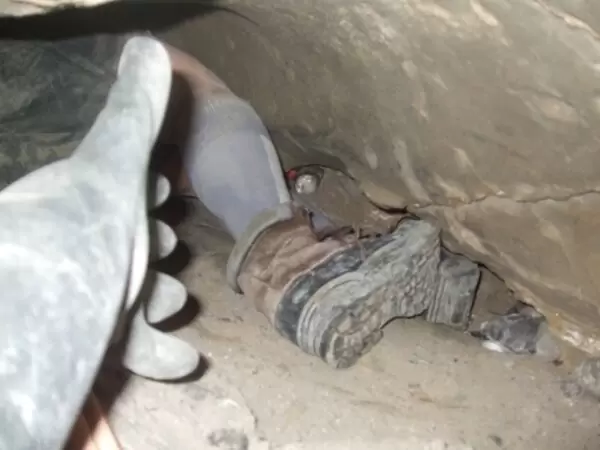
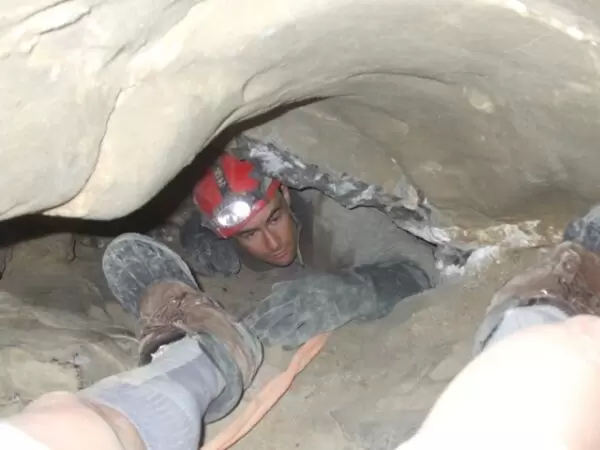
NOTES
- The 4 to 1 haul didn’t work because there were so many twists and turns in the cave between where there was room for a group to stand and haul and John’s position that the friction, even with pulleys in place was enough to render the haul system ineffective.
- This was the moment he passed away.
- Ultimately it was decided it would be too risky to rescuers to attempt to remove the body, and to this day Nutty Putty Cave is the final resting place of John Jones.
RESOURCES
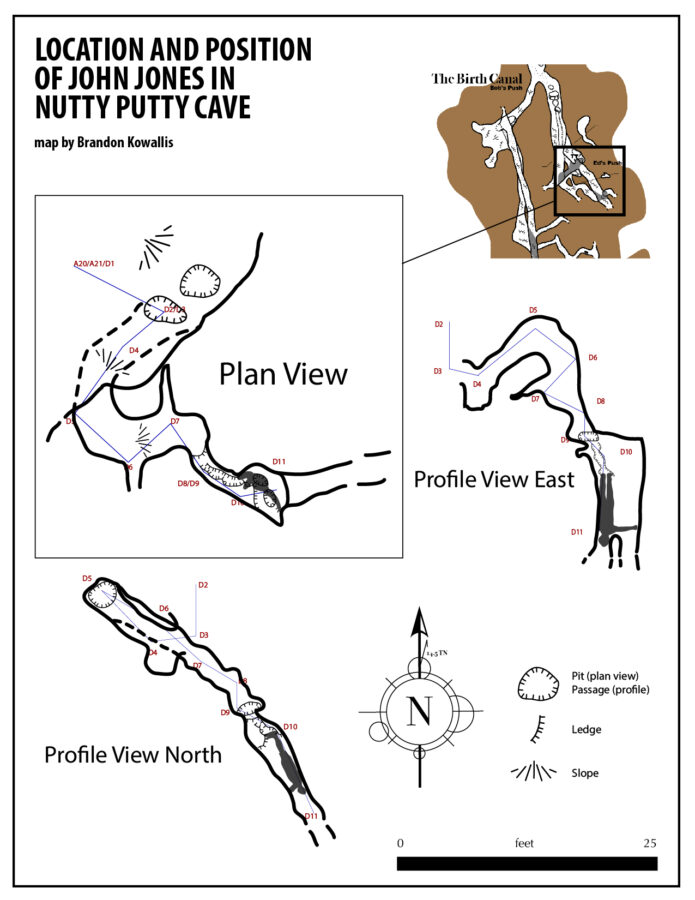
VIDEOS

COMMENTS
Comment about Comments Below
I really appreciate everyone’s kind and encouraging words in the comments below, as well as your questions. Unfortunately, I no longer have time to respond to questions and comments. I will continue to approve the comments you post as long as they are family friendly, but just know that I only log in to approve comments every few weeks.
Thanks again for your kind words!
Brandon, massive respect for what you and all the other rescuers did on the day, just a shame there was never a realistic chance of a positive outcome in this case.
My love goes out to his family, and despite the tragic outcome in this instance, I have nothing but respect for John and the wonderful person he was.
He made one understandable mistake that anyone could have made, and paid the ultimate price.
Thanks Anya. I wasn’t with Ryan when it happened, but from what I heard and remember, they were pulling on the rope attempting to free John and the force on the rope basically pulled the bolt out of the wall with enough pressure that it hit Ryan in the face knock him temporarily unconscious, and left some pretty significant lacerations across his face.
The problem with that is that there was probably 50-100 feet of limestone above him. It would have taken weeks to drill down to him or years to chisel our way up.
Basically experience and intuition. If something seems sketchy you just have to weigh your options and then decided based on your experience and abilities whether it would be wise to do something like that or not. John didn’t have a lot of experience caving, and probably no experience caving with competent, trained cavers, so he probably didn’t realize to a full extent what he was getting himself into, until it was too late. A more experienced caver who knew their abilities and limits probably would have just walked away from it rather than take the risk.
1) No. That kind of thing doesn’t really shake me up that much. Other rescuers who were not experienced cavers were definitely unnerved by the whole thing.
2) I don’t remember anyone saying anything like that. I think we all saw it as a high consequence innocent mistake.
3) We all have the ability to push through our fears. I don’t think most cavers are immediately comfortable in tight places, it’s just a matter of figuring out a way to deal with those fears, for some people, depending on the gravity of that fear, it can be much more difficult than it might be for others.
4) I haven’t. There are some good caves there though. I have been caving in Tennessee and Alabama though. Too many caves even for a lifetime of caving.
5) I can’t think of three words. It had very little impact on me personally.
Hi, I’m a nurse and I was wondering if any meds were given to John during this time.. such as for pain control and anxiety intramuscular. If not, why not? Thank you
Dear Brandon,
i was pretty young at the time this happened.. i was probably around 20 years old. i would have brought my gear to assist. half of gear is normally used for vehicles. but in this situation with john, i think it would have been useful. i have something that is very similar to modern assistance ropes for vehicles. 30FT 7/8 Inch Power Stretch Snatch Strap Vehicle Tow Rope. i have 13 of them and 20 additional more if needed. they’re very flexible and stretchable. if you had something like that you could actually physically pull John out with 10-13 people that way. my plan was pretty simple. you wrap the ropes end on john’s feet and legs, if need to.. wrap them around the shoulder. all that can give you enough room to pull John up a bit, slowly by crawling backwards bit by bit. just barely enough leverage to help himself climb backwards and eventually.. free to turn around but lie face down to allow the body to recover. this is just a theory plan, but it would have been better option than to do nothing at all. by the way, i’m deaf. so i naturally do see ways to lift out of any situation, even if it seems impossible to others. i think the plan would put the body under more strain and pain but it’s enough to make it work at least.. just once. while you’re pulling john with this, the closest person has to pull the ropes slowly with their feet down, against the walls as gripping anchor to pull him up while people in plenty of room to move or wiggle, could pull the ropes. in my experience, useful vehicle tools are seldomly never thought of being used for human rescues like that. hopefully, we won’t have to see other incidents like John’s.
just to be curious.. is it really true that caves are unpredictable? would planning ahead of time would have saved John’s life?
~ Cassandra Saturn
Hi Brandon, after reading about how much size plays into this type of situation, even for the paramedic, I’m curious what the ideal size for cave rescuers is (in height and weight). Thanks for the interesting details. I live in Utah and after finding out about this story, it’s haunted me.
Hi Brandon
Good morning. Thanks for all this insight. Like many people here, I may have accidentally traumatised myself thinking about this too long and imagining what it must have been like for John (may he rest in perfect peace). I’d like to ask you two questions, the first is about a comment you made in reply to another poster earlier this year, here:
“Brandon Kowallis says:
July 4, 2024 at 1:17 pm
I’ll do my best to answer based on what I know:
1. I don’t know about this one. I had to remove his shoe to try and determine if he was dead, so if they didn’t administer some sort of medication it wouldn’t have been through the foot.
2. Everyone besides John went in feet first. In the area where John was stuck it was just big enough to fit two people. He was upside down and the rescuers were right side up.”
In comment number 2, you say the area he was stuck can fit two people? Are you saying the space he occupied while upside down was big enough for two or do you mean the tunnel above him, where his feet where poking out?
The second question; In retrospect is there anything you think may have worked but you (the rescue team) didn’t get the chance to implement?
Are there any caves in Utah or an any of the surrounding areas that are similar to nutty putty cave? I’ve watched a lot of caving on YouTube and have yet to come across similar windy tight passageways as nutty putty had. Also, thank you for answering so many questions surrounding this incident. I think by doing this, it laid to rest a lot of unanswered questions that so many had for years surrounding this incident.
Hello Mr. Kowallis,
I’m wondering what exactly it means to “contort your body” to pass through tighter squeezes when caving? I have heard this terminology used when listening to other caver’s stories in the past, but can never quite understand what it looks or feels like for the actual caver. May you please describe what contorting your body looked or felt like in this John Jones rescue story you have shared?
Thank you for your time.
If so, that would have happened before I got there.
Thanks for your comment Cassandra. Caves are as unpredictable as life. You think you know what you are going to get until you don’t.
Probably 130 or less and 5’9″ or less would be idea.
In the space where he was stuck I was just able to squeeze in beside him and jam myself in the crack he was stuck in. At the top of that crack there was a narrow 10 inch by maybe 14 inch window that he would have to squeeze through to get out. That window was just above his feet. I don’t think there was anything else we could have done differently in retrospect.
Yes. There are quite a few. The best way to find those is to get involved with your local chapter of the National Speleological Society. Those clubs are called Grottos and there are lots of experienced cavers there that can take you teach you safe caving practices and take you caving.
I can’t really think of an easy way to describe that. You could try finding a chair like this one and try squeezing through the bottom of it. https://images.app.goo.gl/qcyahspfPoZx3SsS9. That would give you an idea of what a person might have to do to squeeze through an awkward cave passage.
Has any new equipment or techniques developed since the accident that might allow someone in a similar position today to make it out? I can imagine that someone out there, possibly a rescue professional, would be determined to come up with a solution, should this type of thing ever happen again. To the best of your knowledge, is there anything new in the last 20 years that might have helped him?
Hello Brandon. Not sure if this has been asked but how long was the distance that John had crawled away from a more open space? Are we talking about meters or tens of meters?
During that final crawl or descent, were there any clear spots where he should have realized that it is better to stop instead of progressing?
Great Breakdown, I’m a Veteran, but I have to say Respect 🙏 all the way to you!!! I have seen the you tube videos and stories about this incident, but one thing that I keep asking myself and have some doubts about the decision of leaving his body inside the cave, much Respect 🙏 to the family but we all the technology that we have today 👍, I would think that his family would rather have his body ( rest) out of there and give him a proper burial to close that chapter in their lifes!!
Hey Brandon,
Firstly I’d like to express my gratitude for your efforts to rescue John and for all the other cave rescues you’ve been a part of, both the successful times and the unsuccessful times.
I have a question. Apologies if you’ve already answered this – I haven’t yet read through all of the comments and your replies (I kept going down different rabbit holes, every time someone asked a question, thus resulting in me still not having gotten through all the comments lol). I know that for John it no doubt made little difference about the food and water situation, however my question is actually one that covers rescue attempts you’ve been a part of and also ones that you’ve heard about. This is more specific to where people get trapped and access to that persons head is impossible, resulting in them not being able to eat, or more importantly, drink anything.
Question (specifically regarding the above conditions provided): Have you ever been a part of, or heard of, a rescue attempt that has resulted in the person trapped having an IV placed in their leg (or any exposed body part with an accessible vein for that matter) in order to provide them with fluids/nutrients?
I know it took me a while to get to that question – I wanted to just outline the conditions and acknowledge that a lot of conditions needs to be right in order for it to even be possible to do that. I recently watched a cave tragedy video where I feel that it could have massively helped change the outcome of the rescue. By playing an IV you could give the person fluids and also a glucose solution to help them increase their overall energy output, especially if they’ve been trapped for a very long time. I know that giving morphine (or any pain relief for that matter) isn’t always possible, not because a place can’t be found to do this however because you need the person to be 100% responsive and can’t risk the chances of respiratory depression.
Thank you for taking the time to read my comment and hopefully answer my question. Again, thank you for doing a job that many of us can’t or just aren’t willing to do.
Brandon,
You have imminently more patience than I would in answering the same questions over and over. I guess it’s just an incredibly frightening and heartbreaking story and that draws people, including myself, a massive claustrophobe almost exactly the same height and weight as Jones was, and being very self-aware about getting into tight places. I got stuck in a tiny somewhat hidden bathroom at an Air B’nB with a door that closed tightly with a push from inside. I was in there for a good 45 minutes while screaming and yanking on the handle before anyone found me. Anyway, thanks for all this info and your patience as this went viral again. I cried when I first read the story.
Well, I guess I do have a question that I haven’t seen anyone else ask. You may have to speculate, but why in the world would the Jones party wait until 8PM to begin their descent on the tragic day? Is that a thing among spelunkers to get the maximum possible amount of darkness? Or was it just a strange choice on their part?
Thanks,
Tom
What are your thoughts on them closing off Nutty Putty Cave completely? Do you think this was the right decision as opposed to closing off just the Ed’s Push section for John’s resting place? It seems it was a cave that had a community of spelunkers and is a bit sad to see a piece of nature completely closed. Like you said, all caves inherently have risks to enter.
Hi, I have been seriously engaged in this story for a few months now. I have been thinking about this: Why didn’t the rescue team tie the pulleys to his hand? I know they tied it to his feet/waist, but it seems it would’ve been easier to tie it to his hands because of the ability to grasp and pull. Another thing I was wondering— would he still be alive today if the pulley system didn’t break? Would he have gotten out and seen his family? I really hope you can answer these questions that have been on my mind for a while.
Thank you!!